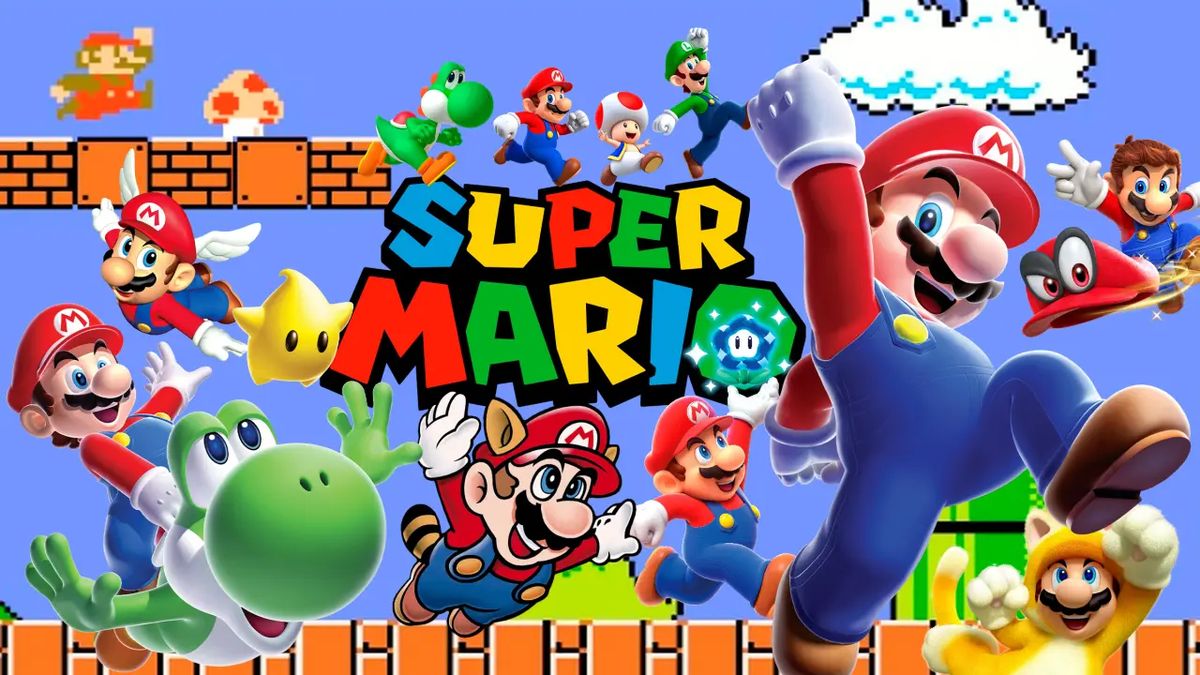
brekzarith.com – Mario Bros is more than just a video game—it is a cultural phenomenon that has shaped the history of the gaming industry for over four decades. From its humble beginnings in Japanese arcades to becoming Nintendo’s most recognizable mascot, Mario’s journey is a story of creativity, innovation, and timeless appeal.
The character who would later be known as Mario first appeared in 1981 in the arcade game Donkey Kong. Created by legendary game designer Shigeru Miyamoto, Mario was originally called “Jumpman” and portrayed as a carpenter trying to rescue a woman from a giant ape. The simple yet engaging gameplay quickly gained popularity, marking Nintendo’s first major success in the global video game market.
Two years later, in 1983, Nintendo released Mario Bros, the game that officially introduced Mario as a plumber and gave him a brother, Luigi. Unlike Donkey Kong, Mario Bros featured a single-screen platform design where players battled enemies emerging from pipes. This title helped establish Mario’s core identity and laid the foundation for future platform-style games.
Mario’s true breakthrough came in 1985 with the release of Super Mario Bros for the Nintendo Entertainment System (NES). The game revolutionized the platforming genre by introducing side-scrolling levels, hidden secrets, power-ups, and memorable music. Players guided Mario through the Mushroom Kingdom to rescue Princess Peach from the villain Bowser. The massive success of Super Mario Bros not only saved the home console market after the video game crash of the early 1980s but also turned Mario into a household name.
Throughout the 1990s and 2000s, Mario continued to evolve alongside gaming technology. Titles such as Super Mario 64 introduced 3D gameplay, while later entries like Super Mario Sunshine, Super Mario Galaxy, and Super Mario Odyssey pushed creative boundaries with new mechanics and imaginative worlds. At the same time, Mario expanded into other genres, including racing (Mario Kart), sports games, party games, and role-playing adventures.
Today, Mario is recognized as one of the most iconic characters in entertainment history. The franchise has sold hundreds of millions of copies worldwide and remains a key pillar of Nintendo’s success. Beyond games, Mario has appeared in television shows, movies, merchandise, and theme park attractions, further cementing his status as a global icon.
From a simple pixelated character jumping over barrels to a symbol of gaming itself, the history of Mario Bros reflects the growth of the video game industry. Decades later, Mario continues to inspire new generations of players, proving that great design and imaginative storytelling truly stand the test of time.