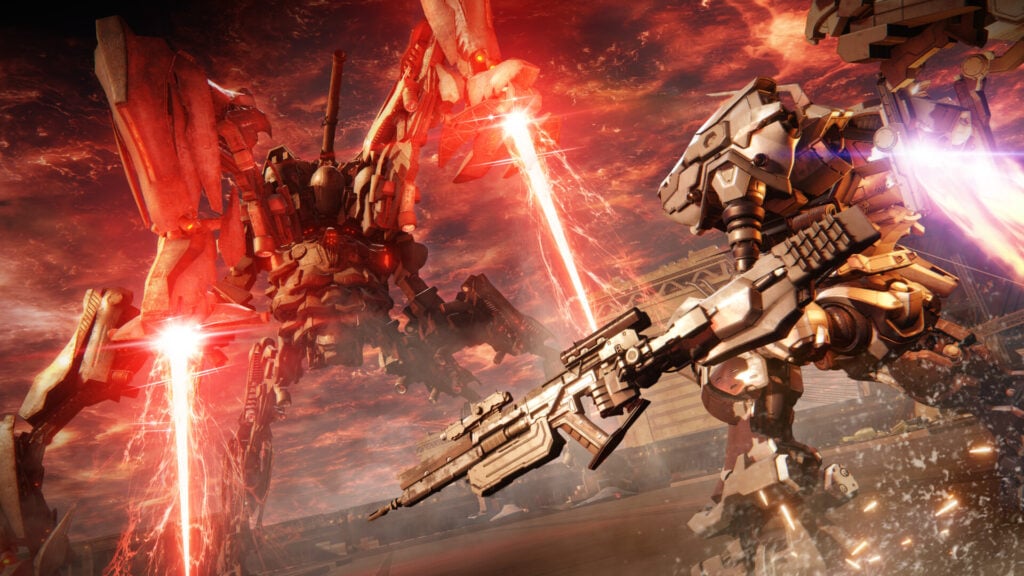
Despite being a high-speed mech action game developed by Armored Core VI: Fires of Rubicon and released in 2023, a quirky trend has emerged among fans in Japan: players are calling the title an “otome game” — traditionally a romantic visual novel genre targeted at female gamers.
The unusual phenomenon has been gaining traction on social platforms like X (formerly Twitter), where Japanese Armored Core enthusiasts debate why a hardcore mech combat game would be viewed through the lens of romance gaming.
This playful reinterpretation of Armored Core VI didn’t start recently. As early as the game’s announcement period in 2022, some users on Steam jokingly tagged it with labels like “cute,” “dating sim,” and “relaxing” — a humorous community tradition especially common with FromSoftware titles that are otherwise known for their brutal gameplay.
One of the key reasons cited by these fans for calling the mech shooter an otome experience is the presence of multiple endings and character interactions that create personal bonds between the protagonist, Raven/621, and several support characters throughout the campaign.
Among these characters are Walter, who supports Raven early on; Rusty, who playfully labels the protagonist a “War Buddy”; and Carla, whose relationship with Raven evolves from skepticism to respect. The character Ayre, often described by fans as a “waifu,” is highlighted for her unwavering emotional support across narrative choices, further fueling the romantic framing.
Player reactions have ranged from enthusiastic to amused. One user declared it “impossible not to feel excited with these characters,” while another commented that Armored Core VI feels like an otome game despite its metal-heavy aesthetic — arguing that the emotional depth in character interactions makes it appealing to gamers of all genders.
Another fan even shared a playful reflection on social media about how the game’s charismatic robots, strong dialogue, and combat synergy make piloting mech units feel almost like developing relationships rather than merely fighting.
What began as a lighthearted joke has grown into a full-blown community trend in Japan, demonstrating how players can creatively reinterpret games beyond their original genre definitions — sometimes even blurring the lines between adrenaline-pumping action and heartfelt narrative engagement.