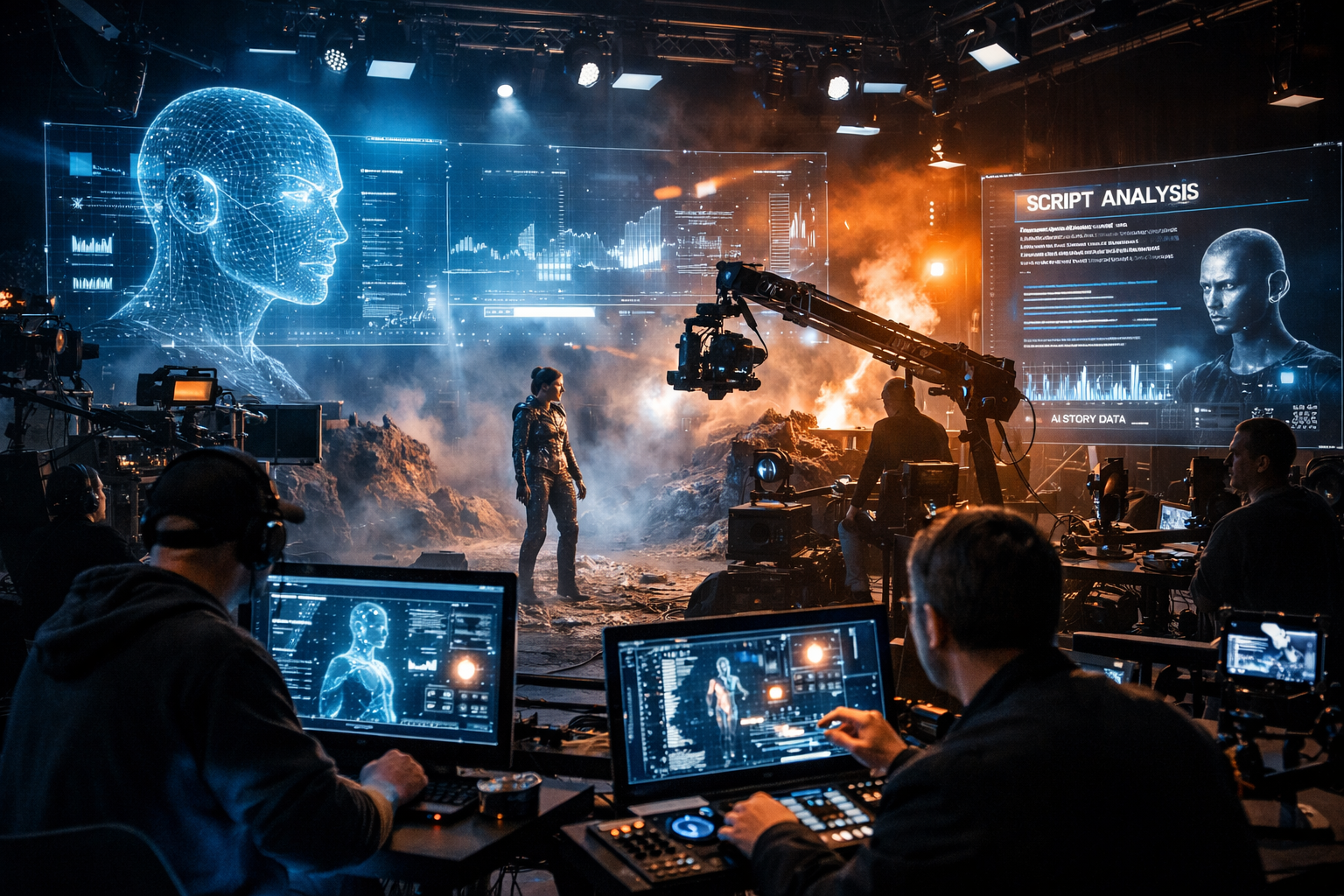
Artificial intelligence is no longer a distant concept in science fiction. Today, AI has stepped into the heart of Hollywood, reshaping how movies and TV shows are written, produced, marketed, and experienced. From script-assisting tools to digital actors and personalized streaming recommendations, AI is transforming the entertainment landscape at a speed no one expected.
But what does this shift really mean for the creators who make entertainment and the fans who consume it? Let’s take a closer look at how AI is changing Hollywood and what the future may hold.
AI Is Becoming a Powerful Tool Behind the Scenes
For decades, filmmaking has relied on human creativity, instinct, and storytelling craft. Now, AI is adding a new layer to that process. Many studios and independent creators are using AI tools to:
- Analyze scripts and predict audience engagement
- Suggest dialogue or story directions
- Edit footage and enhance visual effects
- Generate realistic environments and characters
- Automate subtitles and translations
AI doesn’t replace the creative vision. Instead, it can speed up workflows and reduce costs, especially in the post-production stage. Tasks that once took weeks can now be completed in days or even hours.
For example, AI-powered editing tools can scan thousands of takes and suggest the best shots based on facial expressions or lighting quality. Visual effects teams can generate realistic crowds, landscapes, or backgrounds without building physical sets. Even casting decisions are being influenced by AI models that assess which actors best appeal to certain demographics.
This level of efficiency means studios can create high-quality productions faster and at lower budgets, which is especially important in today’s competitive streaming market.
Scriptwriting and Creative Assistance — A New Era of Storytelling
One of the most talked-about uses of AI in Hollywood is scriptwriting. AI models trained on thousands of screenplays can now generate story outlines, character descriptions, and even full dialogue scenes.
For creators, this opens up new possibilities:
- Writers can brainstorm faster
- Story structure can be optimized using data
- AI can offer alternative endings or plot twists
- Localization becomes easier
However, AI-generated writing remains a tool rather than a replacement. Human writers are still needed to add emotional depth, nuance, and originality. AI can recognize patterns, but it doesn’t truly understand human feelings, cultural context, or the lived experiences that make stories authentic.
This balance between human creativity and machine support will likely define the next phase of storytelling in Hollywood.
Virtual Actors and Digital Doubles — A Controversial Innovation
Another major change is the rise of AI-generated actors and digital doubles. With advanced motion capture and deep learning technology, studios can now:
- Recreate younger versions of actors
- Bring deceased performers back to the screen (with permissions)
- Build entirely virtual stars
- Create stunt doubles digitally
This can reduce physical risk and expand creative options. For example, action scenes that were once dangerous can now be completed safely using digital replicas.
But there are real concerns, too.
Actors worry about rights, ownership, and fair compensation if their likeness is used digitally. Ethical debates are ongoing about consent, royalties, and the potential to replace human performers. Unions and studios are now negotiating clearer rules to protect talent in the AI age.
AI Is Changing How Fans Discover and Experience Entertainment
AI doesn’t just shape how films are made, it also influences how audiences experience them. Streaming platforms use AI algorithms to recommend movies and shows based on viewing behavior, preferences, and trends. This means fans see more content they’re likely to enjoy, often personalized down to genre, cast, tone, and even mood.
Other fan-focused AI innovations include:
- AI-powered subtitles and real-time translations
- Virtual viewing parties and interactive experiences
- Personalized trailers and previews
- AI-enhanced sound and visual quality
Interactive storytelling is also growing. Some platforms now offer choose-your-own-ending content powered by AI branching narratives, allowing audiences to shape the story in real time.
For fans, AI creates a more immersive, tailored entertainment world, one that feels increasingly personal.
Opportunities for Independent Creators
Perhaps one of the most exciting aspects of AI in Hollywood is how it levels the playing field. Independent filmmakers, small studios, and even solo creators now have access to powerful tools that:
- Reduce production costs
- Simplify special effects
- Improve editing quality
- Assist in script creation
- Help market and distribute content
What once required massive budgets and large teams can now be achieved with smaller crews and smarter technology. AI-powered platforms can even help creators analyze audience data, improve engagement, and reach viewers worldwide.
This democratization of filmmaking could bring more diverse voices and stories into the spotlight.
The Ethical and Creative Debate
While AI brings many benefits, it also raises important questions.
- Will AI reduce jobs in the industry?
- How do we protect creative ownership?
- Can AI ever truly understand human storytelling?
- Where is the line between enhancement and replacement?
Creators, unions, and studios are now working to build responsible guidelines. Transparency, consent, fair pay, and creative credit are becoming key priorities in the AI-powered entertainment era.
The goal is clear: use AI to support creativity, not erase it.
What the Future of Hollywood Could Look Like
As technology continues to evolve, AI will likely become even more embedded in Hollywood. We may see:
- Fully AI-assisted production pipelines
- Real-time visual effects creation
- Interactive films that adapt to audience reactions
- Hyper-personalized streaming content
- Virtual celebrities with global fanbases
But one thing remains unchanged storytelling lies at the heart of entertainment. Whether powered by AI or handwritten scripts, the most successful films and shows will still be the ones that connect emotionally with audiences.
And that is something only humans can truly master.
AI is not replacing Hollywood, it is reshaping and expanding it. For creators, AI offers powerful new tools and opportunities for innovation. For fans, it delivers richer, more personalized, and more interactive entertainment experiences.
The future of Hollywood will be built on a partnership between human imagination and intelligent technology. And as long as storytelling remains authentic and emotionally driven, AI will simply become another tool in the creative toolkit not the star of the show.